2026 COLORADO · EPA FUEL ECONOMY
The 2026 Chevrolet Colorado does not have one fuel-economy rating for every configuration. EPA records distinguish 2WD, 4WD, mud-terrain-tire 4WD, ZR2 and ZR2 Bison versions. Drivetrain and tire configuration matter, so match the estimate to the actual truck rather than assigning one number to an entire trim name.
Explore new Colorado inventory at Weber Chevrolet Granite City and ask for the window sticker of the vehicle you are considering. We can help you compare its equipment and fuel-economy label as you plan a purchase near St. Louis.
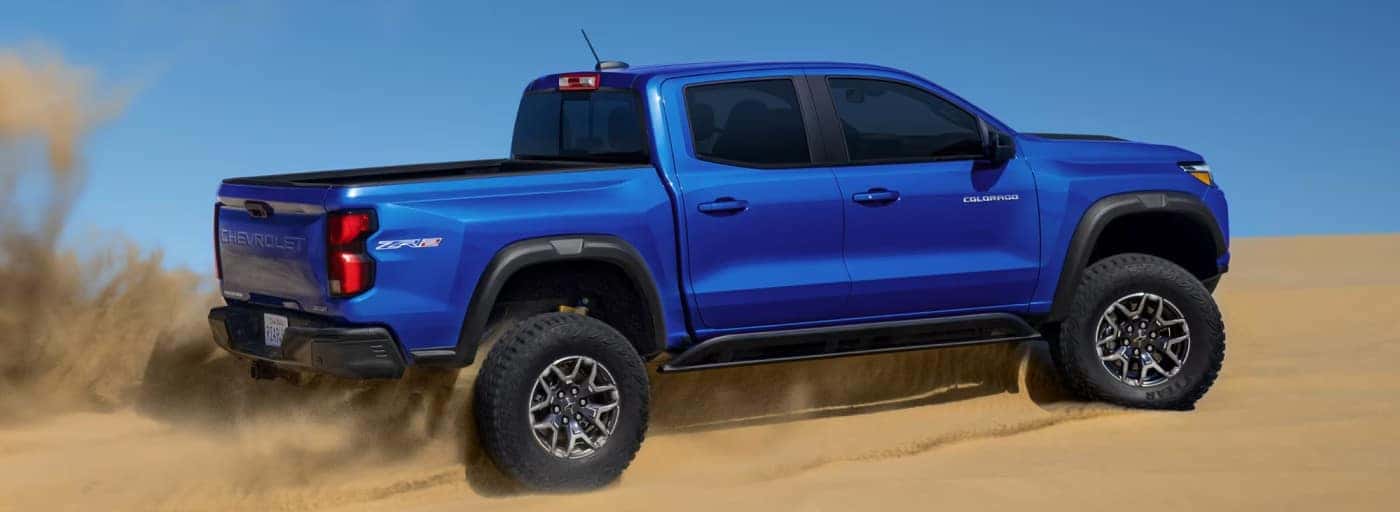
The table uses the EPA’s exact 2026 model classifications. Each listed record has a 2.7L turbo four-cylinder engine, an eight-speed automatic and regular gasoline. City, highway and combined figures are estimates for comparison; your actual results depend on driving and operating conditions.
On a smaller screen, scroll across the table to compare all columns.
| EPA configuration | City MPG | Highway MPG | Combined MPG |
|---|---|---|---|
| Colorado 2WD | 19 | 24 | 21 |
| Colorado 4WD | 17 | 22 | 19 |
| Colorado Mud Terrain Tires 4WD | 17 | 20 | 18 |
| Colorado ZR2 4WD | 17 | 17 | 17 |
| Colorado ZR2 Bison 4WD | 16 | 16 | 16 |
Each configuration name links to its EPA record. These labels are more specific than a general trim chart: a trim name alone may not identify the tire specification reflected in the estimate. Use the vehicle’s own window sticker to confirm which rating applies.
Use your expected annual mileage to estimate how much fuel different configurations might consume. Divide annual miles by the combined MPG figure, then multiply the resulting gallons by the fuel price you expect to pay. Use the same mileage and fuel-price assumptions for each vehicle.
For illustration, 15,000 miles at 21 MPG is about 714 gallons. The same distance at 19 MPG is about 789 gallons, a difference of roughly 75 gallons per year. Multiply that difference by your chosen price per gallon to estimate the fuel-cost difference. This is a planning calculation, not a promise of your actual mileage or annual cost.
The combined rating is a useful comparison point, but a driver who spends most of the week in stop-and-go traffic may experience a different result from someone with steady highway travel. Compare your usual routes, trip lengths and loads alongside the EPA label.
Consider the drivetrain and tires you need for your normal routes. Compare their purchase price and operating costs with the capability you will actually use.
Specialized tires and equipment may serve your use case, while the EPA classifications show a different fuel-economy tradeoff. Choose the configuration deliberately.
Chevrolet lists the 2026 Colorado TurboMax engine at 310 horsepower and 430 lb-ft of torque. Those output figures do not make every configuration identical in fuel use or towing capability. Check the drivetrain, tires and equipment on the actual vehicle and review its ratings if you plan to tow.
Before choosing a configuration, list your regular passengers, bed cargo and any trailer. Include how often those loads occur. An unloaded test drive can help you evaluate comfort and controls, but it does not reproduce fuel use while towing or carrying a heavy load.
If you need a different size of truck, compare Silverado 1500 inventory using the appropriate fuel label and configuration. If price is the main concern, look at used Colorado inventory and compare year, equipment, condition and expected maintenance as well as fuel economy.
Track several fill-ups rather than drawing a conclusion from one short trip. Record miles driven and fuel added consistently, and note unusual conditions such as towing, prolonged idling or a change in route. A dashboard estimate can be useful, but a longer record gives you more context.
Follow the owner’s manual and the tire-pressure placard for your vehicle. Address maintenance needs and warning lights, and ask the service team about a sudden or unexplained change in fuel use. Use service scheduling when you need an appointment.
Before changing tire size or adding equipment, ask about compatibility, load ratings and the effect on the vehicle’s operation. Our parts team can help identify suitable components. A modified truck should not be assumed to achieve the same result as the original EPA-tested configuration.
Manufacturer engine information is available from Chevrolet’s 2026 Colorado page. The fuel figures above come from the linked EPA records, checked November 5, 2026.
The EPA’s 2026 Colorado 2WD record lists 19 city, 24 highway and 21 combined MPG. Confirm that the actual truck matches that classification and its window sticker.
No. EPA records separately identify regular 4WD, mud-terrain-tire 4WD, ZR2 and ZR2 Bison configurations. Their estimates differ, as shown in the table.
Do not calculate a simple average of the two displayed numbers. Use the combined estimate published for the vehicle when making a consistent comparison.
Actual fuel use can change with trailer load, speed, terrain and operating conditions. The EPA comparison label should not be treated as a towing fuel-economy promise.
No. Look up the correct model year, engine, transmission and drivetrain. Older Colorados can have different powertrains and EPA classifications.
Send us a Colorado stock number and tell us about your annual mileage and typical use. We can review the listed equipment and fuel-economy label, discuss current availability and arrange a test drive. The finance application is available when you are ready; lender approval and terms apply.